



Areola Dermapigmentation Prague — Natural Look & Confidence
Areola dermapigmentation is a modern permanent makeup technique that restores the natural and symmetrical appearance of your breasts. Using specialized pigments matched to your skin tone, we create a realistic three-dimensional (3D) effect — the result is virtually indistinguishable from a natural areola.
Areola dermapigmentation in Prague helps both women and men after surgical procedures, pregnancy and breastfeeding, with congenital differences, and for purely aesthetic corrections. It is not just a solution after mastectomy — it is professional care for anyone who wants to regain their confidence.
At AR aesthetics, areola dermapigmentation is performed by the founder Alesia Rybak, with over 13 years of experience. Every procedure is individualized — from pigment selection to the shape and size of the areola. We work with discretion, sensitivity, and always with respect for your wishes.
📞 Call (+420) 776-781-788, email [email protected] or visit us at Na Čečeličce 855/7, Smíchov, Prague 5.
Who Is Areola Dermapigmentation For?
Areola dermapigmentation addresses a wide range of situations — from reconstruction after surgery to purely aesthetic corrections. See if you recognize yourself in any of these categories.
A. After Surgical Procedures
Breast surgery often changes the shape, color, or symmetry of the areolas. Dermapigmentation is a non-invasive way to achieve a natural look without further surgery.
- After mastectomy (breast cancer) — complete areola restoration from scratch, including a 3D nipple effect.
- After breast augmentation — correction of scars and changes in areola shape following implants.
- After breast reduction — restoration of shifted or deformed areolas.
- After mastopexy (breast lift) — camouflage of scars around the areolas from the lift procedure.
- After top surgery (gender-affirming) — sensitive reconstruction tailored to individual wishes.
- After nipple reconstruction — adding a 3D effect and natural color to a reconstructed nipple.
B. After Pregnancy & Breastfeeding
Pregnancy and breastfeeding naturally change your body — including the color and shape of your areolas. Dermapigmentation restores their original appearance.
- Pigment loss after pregnancy — areolas fade and lose color intensity.
- Changes after breastfeeding — fading, shape changes, loss of areola definition.
- Natural fading with age — reviving color and freshness of the areolas.
C. Congenital & Genetic Differences
Some women and men are born with differences that can be addressed through dermapigmentation — discreetly and without surgery.
- Genetic pigment deficiency — naturally pale or undefined areolas from birth.
- Congenital areola asymmetry — different size, shape, or position of left and right areolas.
- Areola size correction — visual correction of areola size through micropigmentation.
- Inverted nipples — visual camouflage for a more natural appearance.
D. Aesthetic Corrections
You don’t need a medical reason — areola dermapigmentation is a fully legitimate aesthetic procedure for anyone who wants to look and feel better.
- Uneven tone or color — color unification of the areolas.
- Faded contours — adding definition and freshness.
- Unsatisfactory shade — color correction to your desired tone.
- Visual areola resizing — optical size correction through pigmentation.
E. Scars & Damage in the Breast Area
Scars near the areolas can be effectively camouflaged with dermapigmentation — the result is natural and long-lasting.
- Post-surgical scars near the areolas — camouflage of surgical scars.
- Stretch marks on the breasts — camouflage of stretch marks with pigment matched to your skin.
- Keloid scars — specialized approach to keloid scars around the areolas.
- Gynecomastia (men) — areola correction after gynecomastia surgery.
Why AR aesthetics?
- 👩🏻⚕️ Alesia Rybak — founder with 13+ years of experience, MŠMT accredited trainer.
- Individual approach — pigment is custom-matched to your natural skin tone.
- Discretion & sensitivity — we understand this is an intimate topic. We work with respect.
- 3D effect — the result is virtually indistinguishable from a natural areola.
- Hundreds of satisfied clients — rated 4.9/5 on Altegio (488 reviews) and 4.9/5 on Altegio (488 reviews).
Areola Dermapigmentation Pricing
| 1 areola | 7,500 CZK (~€300) |
| 2 areolas | 11,500 CZK (~€460) |
| Correction (up to 3 months) | 50% of the main procedure price |
| Correction (3–12 months) | 70% of the main procedure price |
| Correction (12–18 months) | 80% of the main procedure price |
| 💰 Free consultation | 0 CZK |
The exact price is determined individually based on the scope of the procedure. Full price list of all services →
In support of the global fight against breast cancer, AR aesthetics offers areola dermapigmentation to women after mastectomy completely FREE of charge. Contact us for more information.
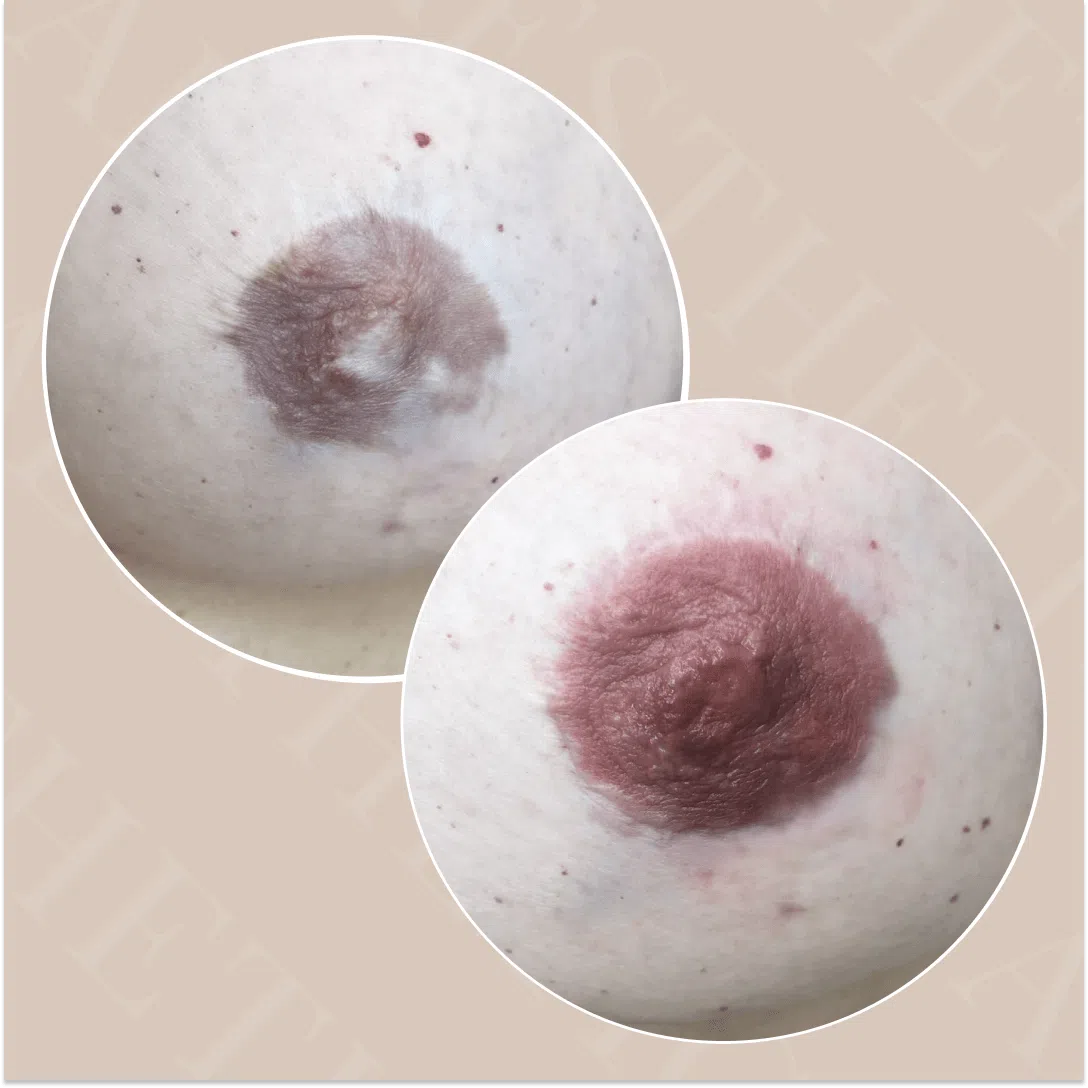
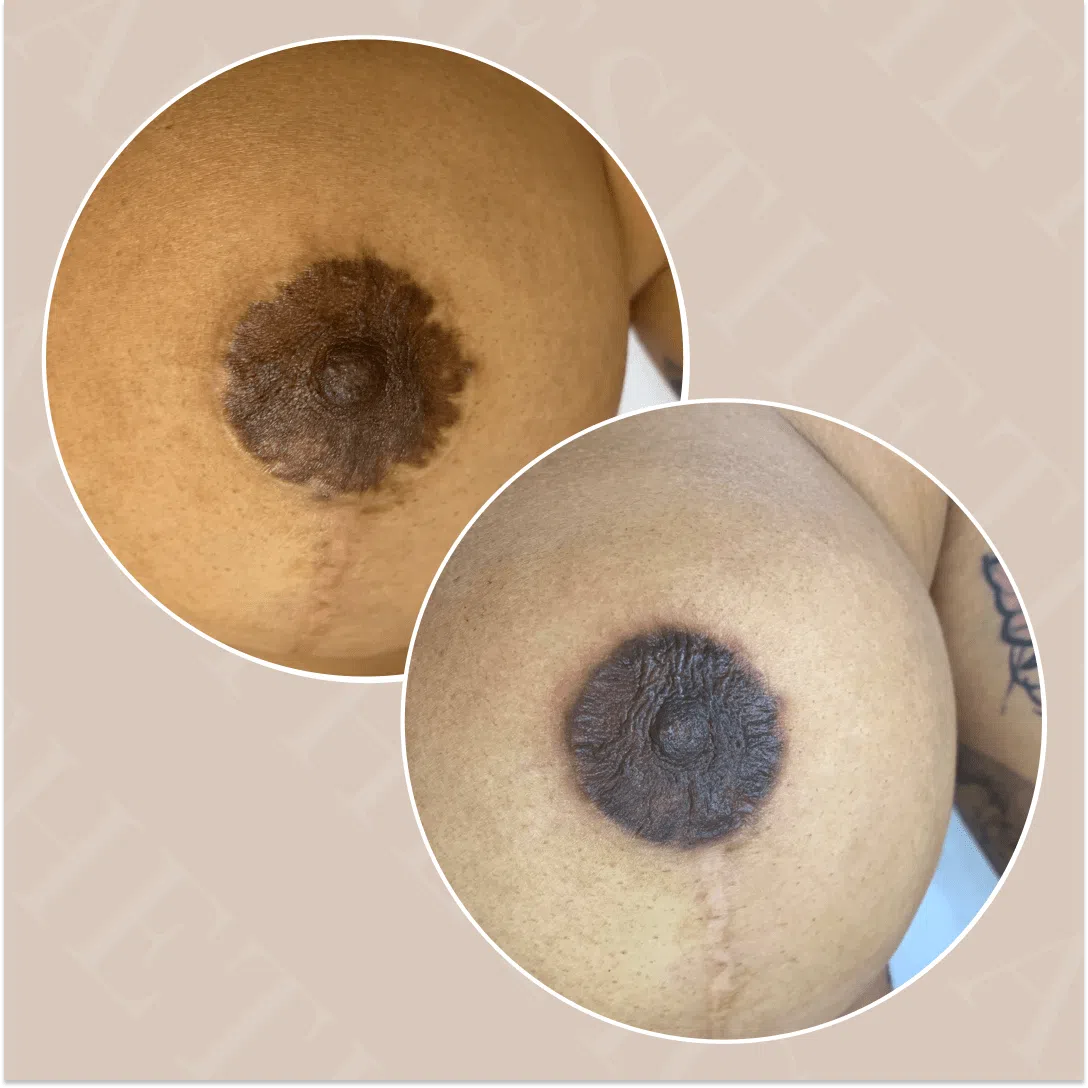
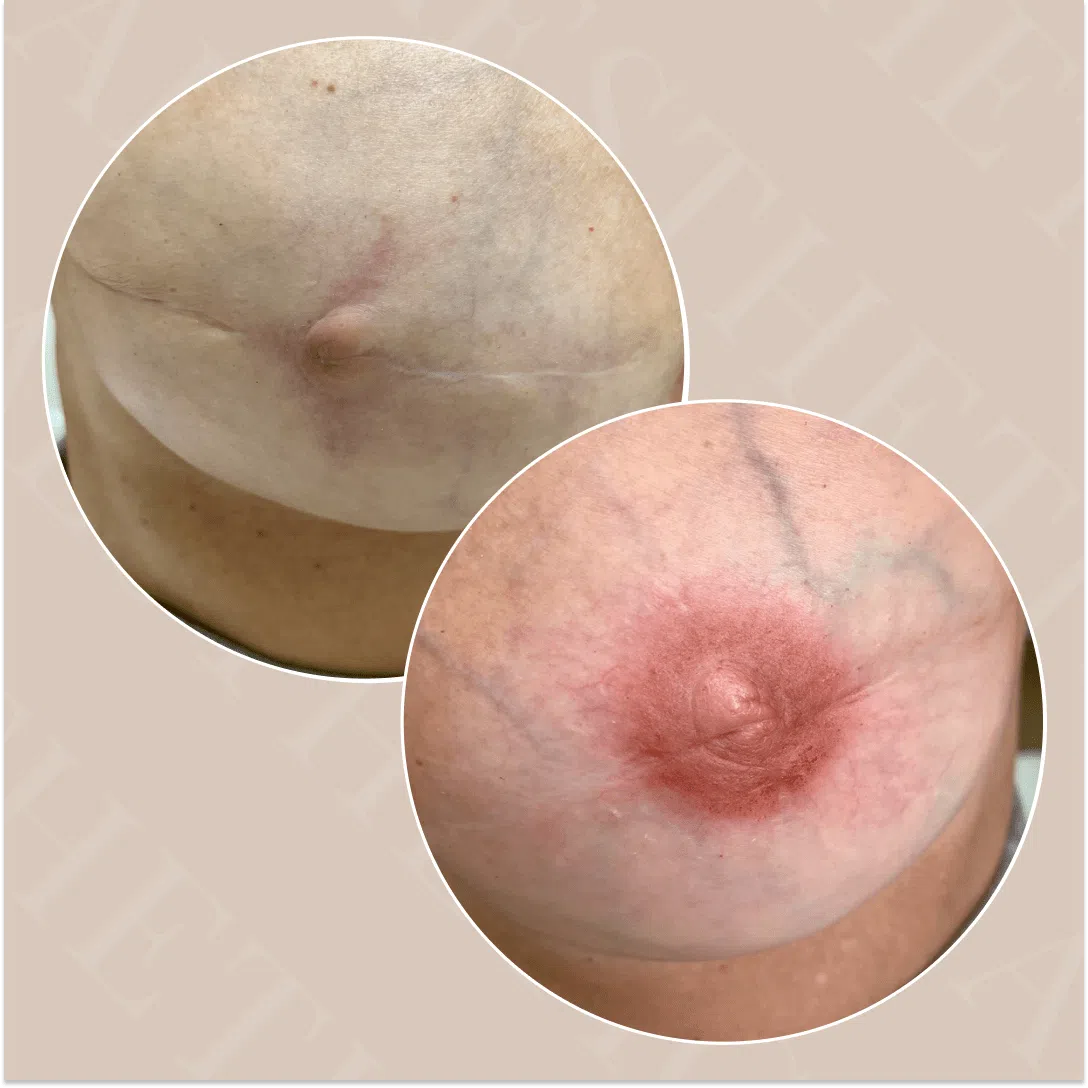
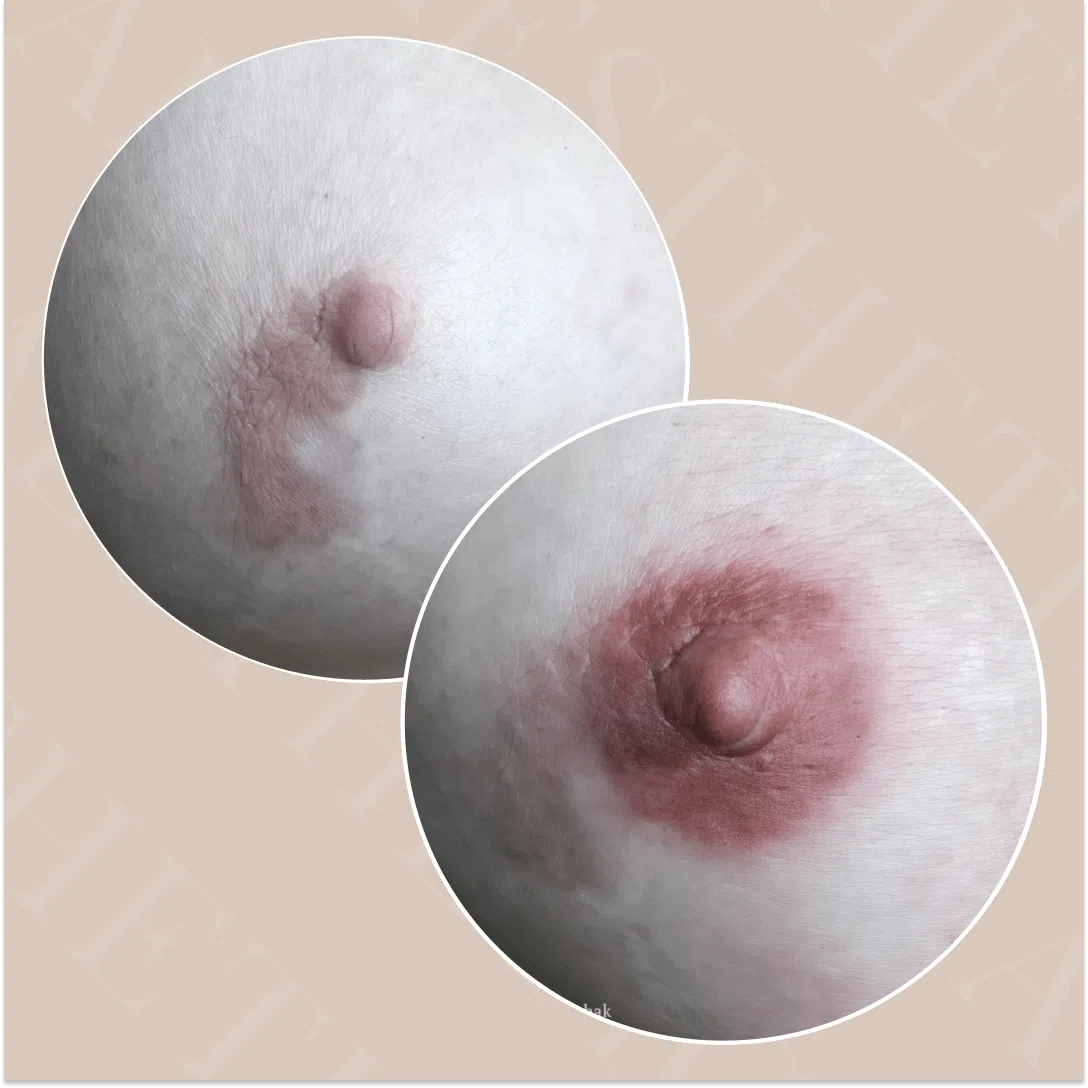
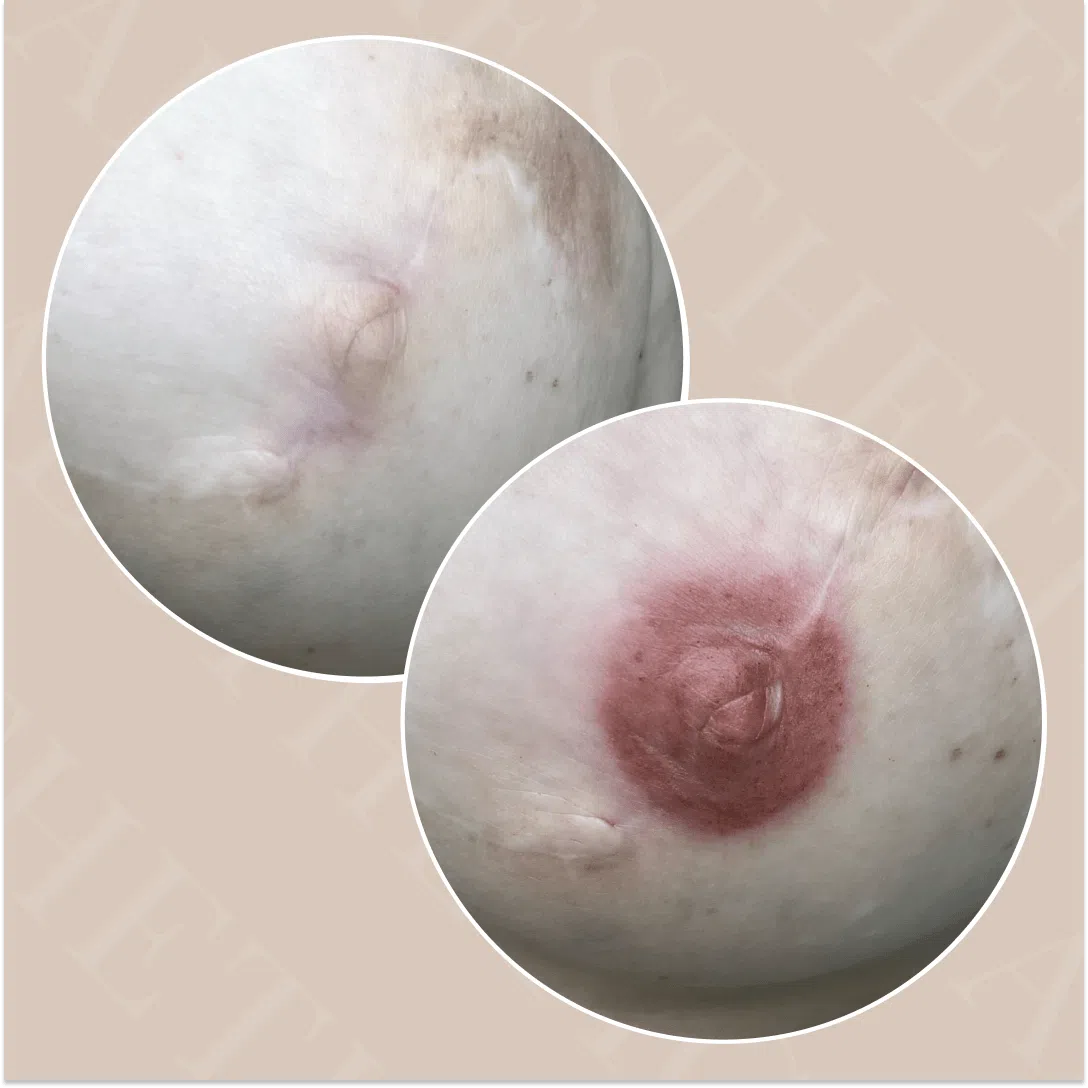
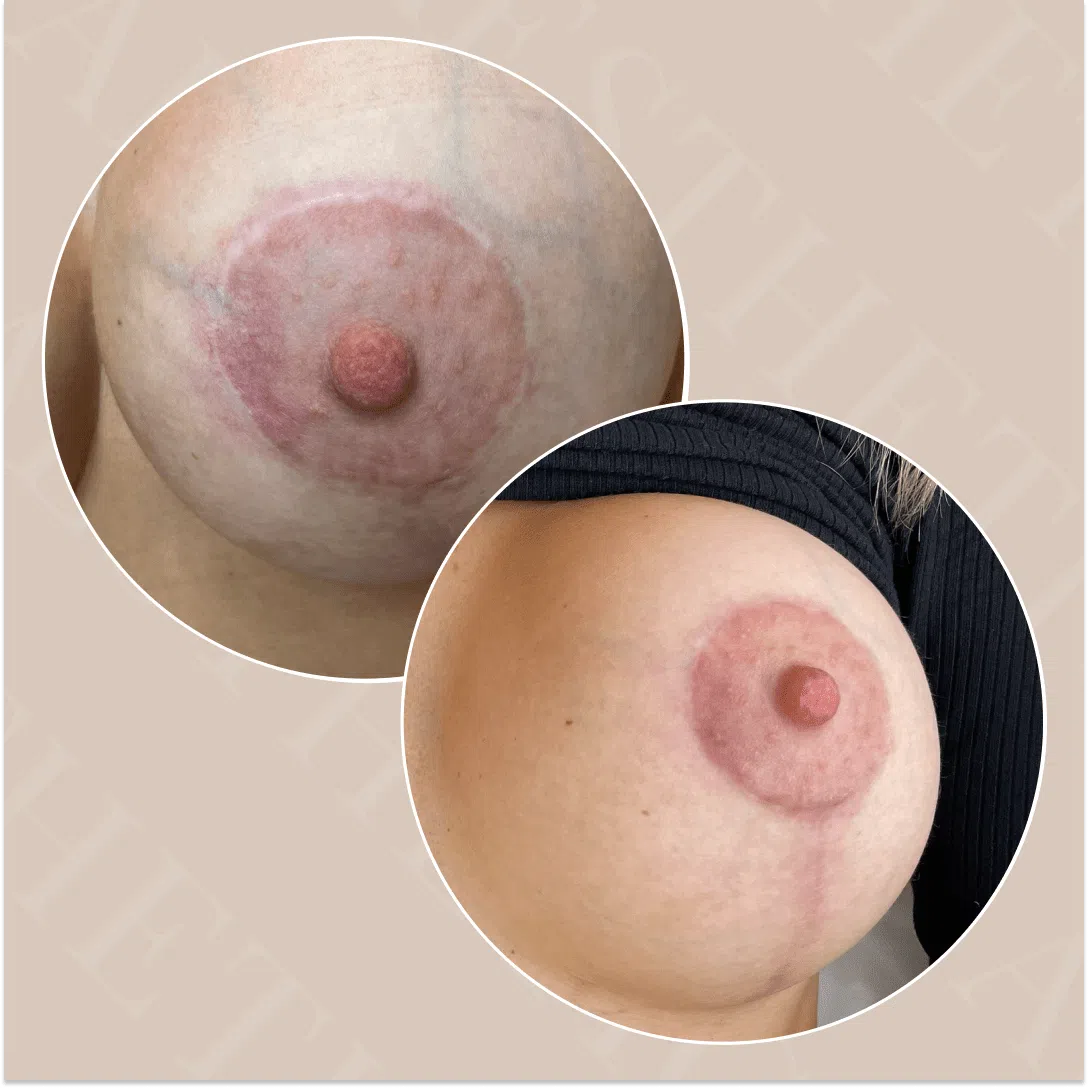
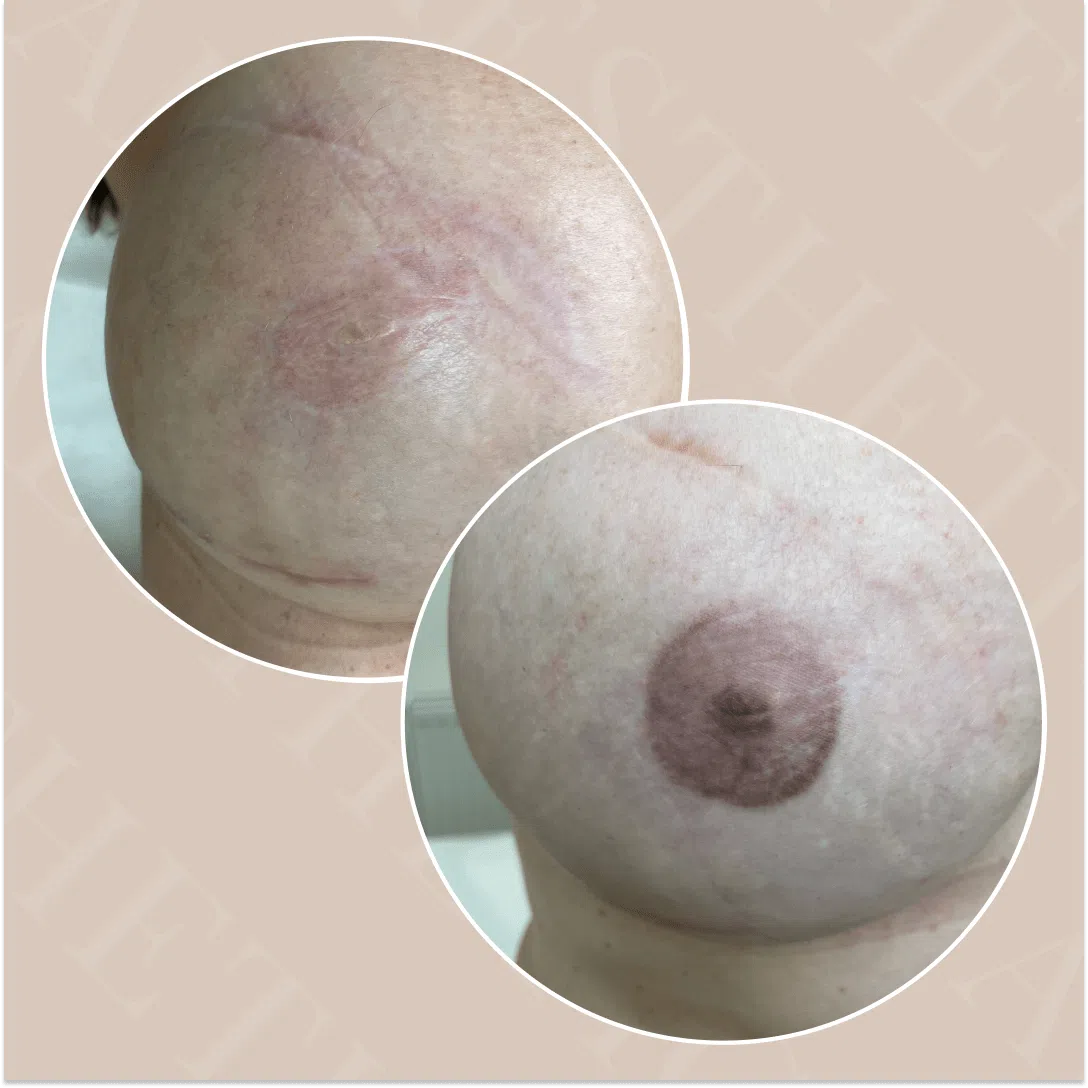
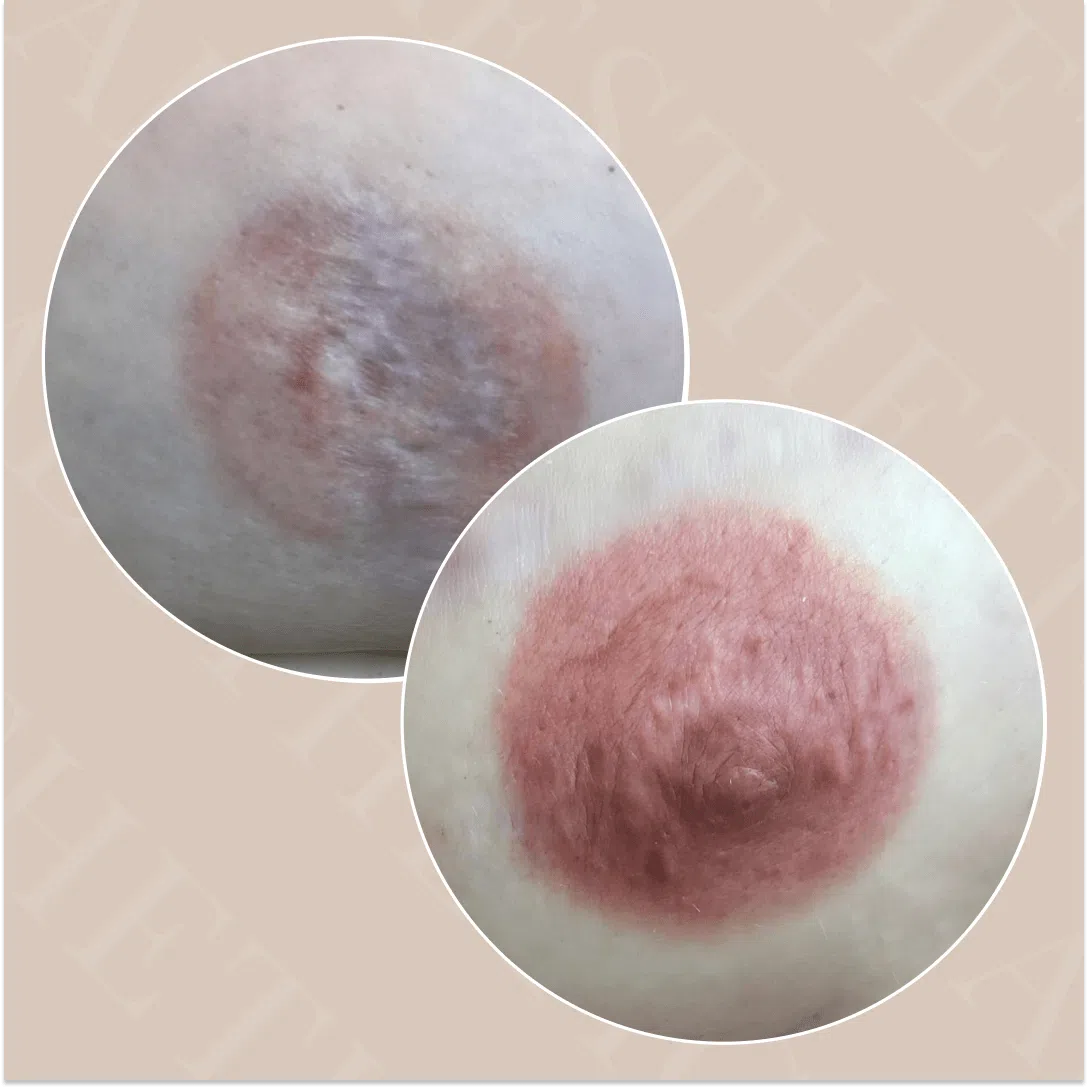
The entire process is painless thanks to local anesthesia in the form of a cream. The procedure takes approximately 1–2 hours.
-
1. Consultation
Initial discussion, assessment of your situation, and completing documentation.
-
2. Pigment Selection
Individual selection of pigment shade precisely matched to your skin tone.
-
3. Anesthesia
Application of local anesthesia — a specialized cream, no needles.
-
4. Procedure
The dermapigmentation itself — precise work with emphasis on a 3D effect.
-
5. Aftercare
Healing instructions, correction in 1–3 months.
Frequently Asked Questions (FAQ)
Does areola dermapigmentation hurt?
Minimal discomfort. We use local anesthesia in the form of a specialized cream — most clients describe the sensation as a gentle tingling. Women after mastectomy often have no sensation in the area, making the procedure completely painless.
How long do the results last?
Areola dermapigmentation results last 1–3 years depending on skin type, lifestyle, and aftercare. After fading, you can undergo a refresh at a reduced price.
How many sessions are needed?
Typically 1 session + 2–3 correction procedures after 1–3 months. Without correction, the procedure is considered incomplete — corrections fine-tune the color and shape to the final result.
Is areola dermapigmentation suitable for men?
Yes. Men most commonly seek areola dermapigmentation after gynecomastia surgery or to camouflage scars in the breast area. The result is discreet and natural-looking.
What is the healing process like?
Complete healing takes 30 days. Immediately after the procedure, the color appears more intense — it gradually settles to a natural tone. During the healing period, you must follow the specialist’s instructions (special ointment, no sunbathing or swimming).
Can I come for a free consultation?
Yes, a free consultation is standard. We will assess your situation, explain the process, and answer all your questions — with no obligation whatsoever.
How to Prepare for the Procedure
Before the procedure, each client receives a set of recommendations from the specialist that must be followed to achieve the best results and ensure an optimal course of the application.
- Do not stop or change prescribed blood-thinning or vasoconstrictor medicines on your own; agree any preparation for the procedure with your treating physician.
- Do not stop or change prescribed antibiotics on your own; discuss current or recent antibiotic treatment and the timing of the procedure with your treating physician.
- For 24 hours before the procedure, avoid spicy and heavy food. Avoid coffee, alcohol, strong tea, and other stimulating drinks. Do not apply skincare products or brow growth serums. All of these contribute to blood thinning, which may lead to lymph secretion and complications during healing.
- 10 days before the procedure, avoid natural and artificial sunbathing. If your skin changes shade due to sunburn, it will not be possible to select the correct pigment tone.
- Do not smoke for at least 2 hours before the procedure.
Absolute contraindications
- Blood disorders: Von Willebrand disease, hemophilia, hypertension.
- Subfebrile and high temperature.
- Oncological diseases.
- Acute phase of any illness.
- Hepatitis, HIV, AIDS.
- ARI, URTI, acute inflammatory diseases, initial stages of the common cold.
- Predisposition towards keloid scars.
- Epilepsy.
- Presence of unknown neoplasms, especially in the areas where the procedure will be conducted.
- Asthma.
- Chemo/radio therapy.
- Mental disorders.
- Surgical operations, plastic surgery and subcutaneous infiltration in the period of stabilization (1–6 months).
- First trimester of pregnancy.
Relative contraindications:
- Weakened immunity, rehabilitation period after surgical or cosmetic operations.
- Allergy and hypersensitivity to components of the pigment.
- Dermatitis, acute pyoderma, and psoriasis in the areas where the procedure will be conducted.
- Consumption of corticosteroids, strong antibiotics, anticoagulants, retinoids (possible scarring, delayed healing), vitamins and dietary supplements, alcohol.
- Pregnancy in the second and third trimester. The procedure can only be performed with a doctor’s approval and without the use of anesthesia.
- Breastfeeding. The procedure is not recommended during the first month of breastfeeding, as hormonal levels are still stabilizing and this may affect the outcome. After the first month of breastfeeding, there are no further restrictions.
Aftercare
The final result is at least 50% dependent on following all aftercare instructions. This should include strict hygiene rules and, if necessary, products recommended by the specialist.
1–2 days after the procedure, redness or minor swelling may occur. For 7–10 days after the procedure, the pigment color in the treated area will appear more intense. Afterward, the intensity decreases and the color settles to a natural tone — optimally matching the shade originally selected.
- After the procedure, the skin must be treated with a special preparation.
- During the healing period, sunbathing and applying makeup in the treated area is prohibited.
- Do not take long baths, steam baths, or visit saunas or pools for at least two weeks after the procedure. Further information and aftercare recommendations are provided to the client along with other documentation before the procedure.
To achieve the desired quality and longer-lasting results, it is necessary to undergo 2–3 correction procedures starting from 1 month after the initial visit. Without corrections, the procedure is considered incomplete.